How do the Rishonim that hold it is prohibited explain the גמרא דף קנ”ד?
What are the proofs from the גמרא דף מג that ביטל כלי לשעה is prohibited?
How does the בעל המאור who holds that ביטל כלי לשעה is permitted explain the original assumption of the Gemara that the cases of catching the flying sparks and placing a basket in front of chicks are prohibited because of ביטל כלי as these were only temporary ביטל?
According to the רשב”א that ביטל כלי לשעה is prohibited. Why is it permitted in a case of loss?
Learn ה’ אשרי על רא”ש ס’ יח
What extra chidushim do we learn from the ה’ אשרי?
How does the Rishonim that hold it is prohibited explain the גמרא דף קנ”ד?
What are the proofs from the גמרא דף מג that ביטל כלי לשעה is prohibited?
How does the בעל המאור who holds that ביטל כלי לשעה is permitted explain the original assumption of the Gemara that the cases of catching the flying sparks and placing a basket in front of chicks are prohibited because of ביטל כלי as these were only temporary ביטל?
According to the רשב”א that ביטל כלי לשעה is prohibited. Why is permitted in a case of loss?
Learn ה’ אשרי על רא”ש ס’ יח
What extra chidushim do we learn from the ה’ אשרי?
Write a summary based on תוס’ דף מד. “מטה, the גמרא דף לו with Rashi & תוס’ דף לו. “אמר ר’ יהודה, and תוס’ דף מד: “הא – of the different explanations we learnt last week
Why a מטה שיחדה למעות is considered Muktzah?
What level of Muktza it is?
Is it Muktzah just according to ר”י or even according to ר”ש?
Learn רא”ש פרק ג ס’ כ starting from הוא שאמר רב מטה (towards the end)
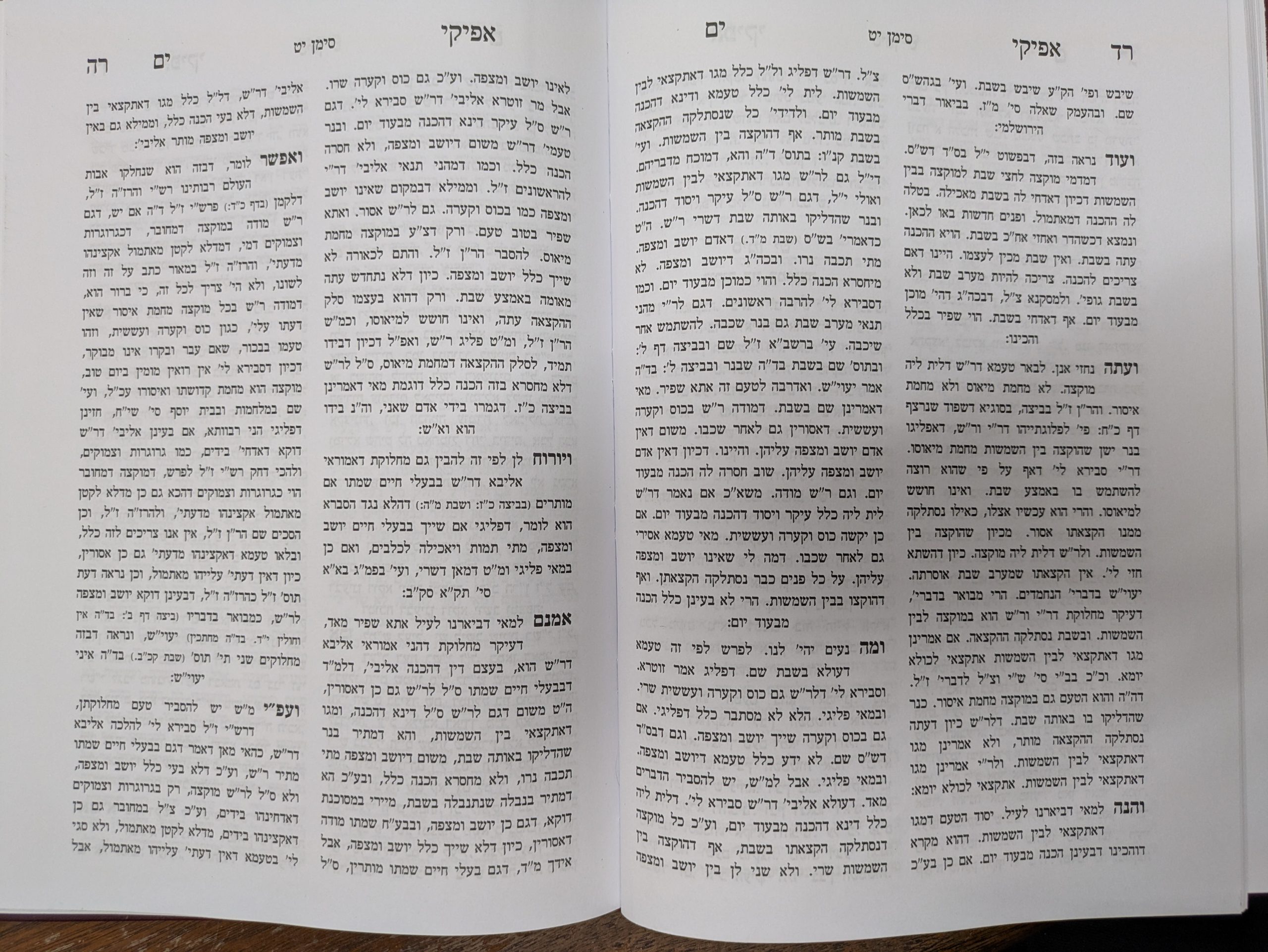
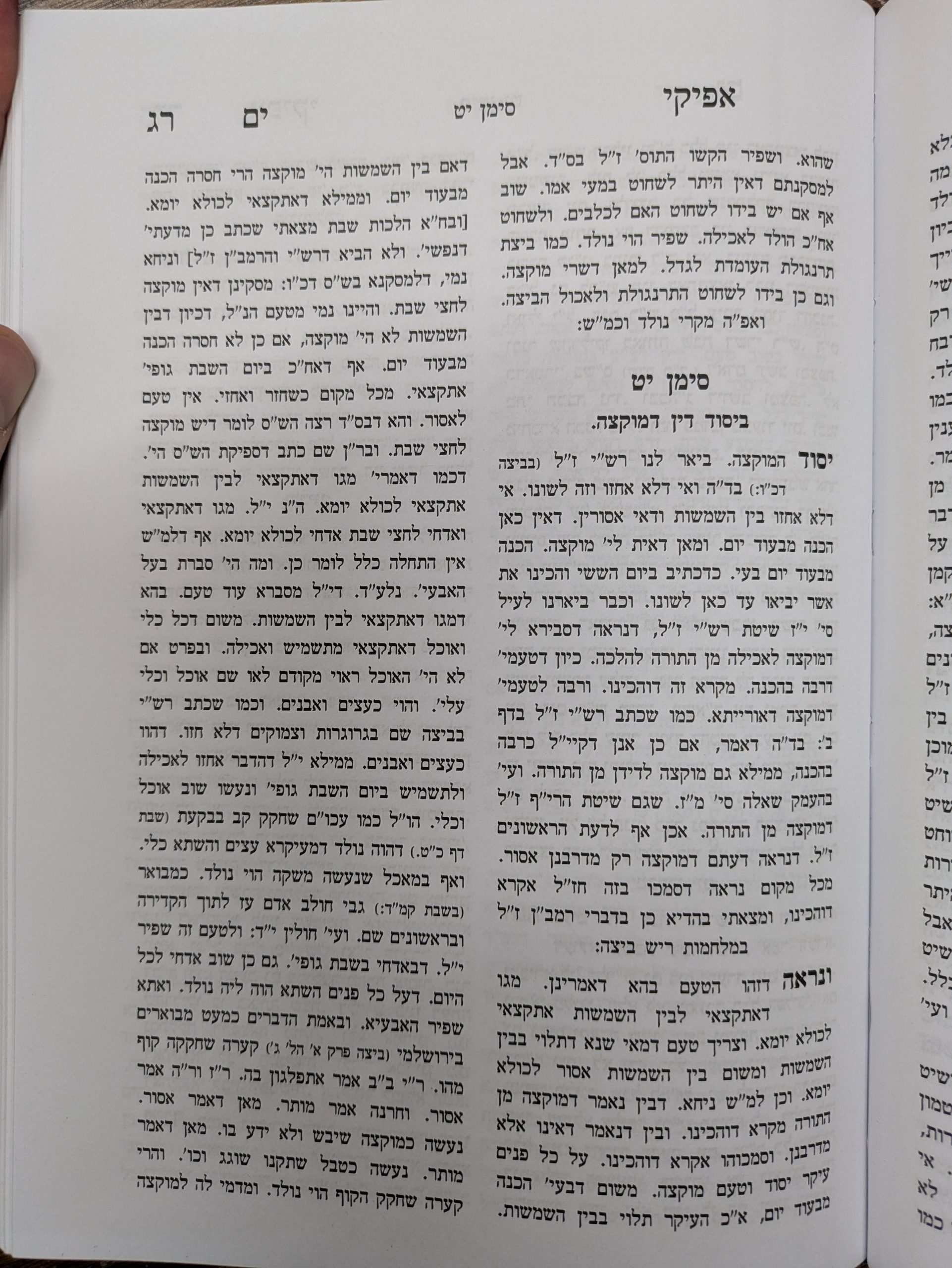
The אפיקי ים חלק ב ס’ יט (first two paragraphs) explains the source is “והכינו” an item has to be prepared for use for Shabbos. If it was not prepared before Shabbos than it is Muktzah
2. Why does ר”ש not hold of – מיגו דאתקצאי?
The אפיקי ים חלק ב ס’ יט – (page רד bottom of the right column “והנה”) gave two explanations
A) Either ר”ש does not agree to the requirement that an item needs to be prepared for Shabbos
B) He agrees to והכינו however in a case where the person is anticipating using it on Shabbos although it might be off limits at the beginning of Shabbos it is considered prepared.
3. Why does ר”ש agree that a large container of oil is muktza even after the flame goes out?
The אפיקי ים חלק ב ס’ יט – (page רד – left column) explained as the lantern and oil were not prepared for use for Shabbos/
4. There is a machlokes about what the position of ר”ש is in regards to an animal that died on Shabbos whether it is Muktzah.
What is the reasoning behind this machlokes?
This is a matter of dispute between the אפיקי ים and the Chazon Ish.
Based on what we learned from the אפיקי ים and the Chazon Ish how can we explain the logic that only when there is a combination of מוקצה מחמת איסור and מוקצה מחמת מיאוס will we say מיגו דאתקצאי ?
Learn גמרא דף מד. “אמר רב יהודה (two lines from bottom of the Amud) until דף מד: “אמר עולא (middle of the Amud)
There is a major machlokes between ר”י & ר”ש if a lantern that was lit at the begining of Shabbos remains Muktzah for the entire Shabbos even after the flame is extinguished.
This machlokes is contingent on the concept of מיגו דאתקצאי – something which is Muktza during Bein Hashmoshas remains Muktza for the entire Shabbos.
Major Question:
What is the reasoning of מיגו דאתקצאי?
Review the אפיקי ים חלק ב ס’ יט – first two paragraphs.
Why does ר”ש not hold of – מיגו דאתקצאי?
Learn אפיקי ים חלק ב ס’ יט – (page רד bottom of the right column “והנה” for an incredible explanation)
The Gemara brought two opinions in regards to a large container of oil if ר”ש agrees that it is muktza even after the flame goes out.
What is the explanation for their argument?
Learn אפיקי ים חלק ב ס’ יט – (page רד bottom of the left column “ומה נעים” for an incredible explanation.
Based on what we learnt from the אפיקי ים and the Chazon Ish how can we explain the logic that only when there is a combination of מוקצה מחמת איסור and מוקצה מחמת מיאוס will we say מיגו דאתקצאי